Behind the Data: Resilience at Chiron
· Martina Atanasoski, Michelle Cohl
Behind the Data: Resilience
At Chiron Sports Performance in Bloomfield Hills, we assess resilience using advanced testing and
objective data to measure six key areas of athletic performance through the Chiron Six,
creating an Athlete Blueprint that identifies strengths, uncovers weaknesses, and guides
individual athlete development.
How We Measure Resilience as Part of the Chiron Six
A football player can be one of the fastest athletes on the field, yet his hamstrings aren’t
nearly as prepared as they should be for the demands of the game.
A basketball player might jump higher than everyone else, but struggle to withstand the
repeated demands of landing, sprinting, or changing directions throughout the season.
Both athletes are exceptional.
But are they resilient?
Resilience is sometimes thought to be just another way of talking about endurance. But
in an athletic context, there is much more to resilience than merely being able to endure
impact.
Resilience is also about bouncing back quickly and strongly – and being able to
maintain that capacity of performance over a long period of time. This requires their
bodies to withstand significant physical loads, often repeatedly and with limited time for
recovery.
Why Resilience Matters
An athlete’s ability to perform isn’t simply determined by how strong they are.
Co-founder and lead physician at Chiron, Dr. Chibuzo “Casey” Ohanaja, also known as
Dr. Oh, explains that resilience involves understanding an athlete’s tissue capacity –
including how much force their muscles can generate and how well they can tolerate
demands over time.
A soccer player might have exceptional speed but still possess weakness in the
muscles responsible for accelerating, decelerating, and changing direction.
That amount of force matters, but so does how quickly that force is applied, how
frequently it occurs, and how much time an athlete has to recover.
At Chiron, understanding how athletes respond to demands provides valuable
information about performance and injury risk.
How Chiron Measures Resilience
Measuring resilience starts with understanding what an athlete’s tissues are capable of
handling.
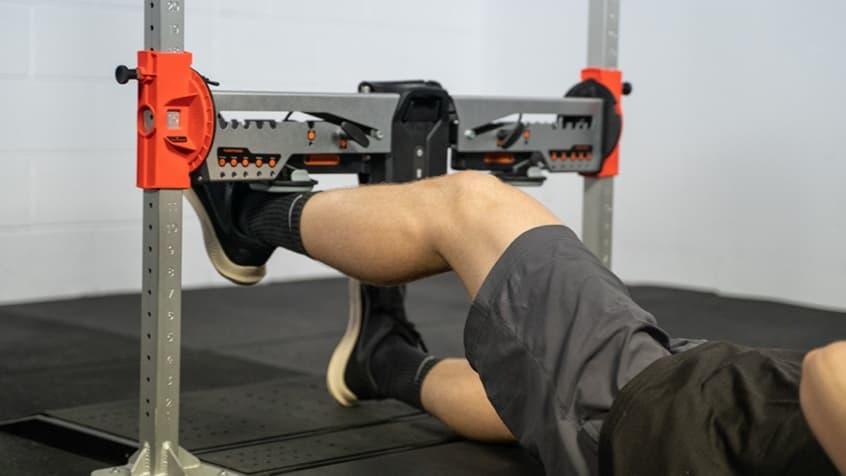
One way Chiron measures this is through the NordBord, which evaluates hamstring
strength, maximum force production, and the differences in strength between the left
and right sides of the body. Additionally, the ForceDecks allow Chiron to measure how
the body produces, absorbs, and transfers force during movement.
This technology provides objective data about an athlete’s physical capabilities, which
may not be apparent by simply watching an athlete compete.
But testing is only part of the equation.
Chiron uses these devices as part of a targeted training and rehabilitation program,
allowing the team to address which areas of weakness were identified during the
assessment.
By combining testing, training, and recovery, Chiron evaluates the athlete as a whole.
And sometimes, that picture reveals something surprising.
When Speed Hides a Weakness
A surprising fact is that much of resilience is connected to hamstring health.
Hamstrings are essential to numerous athletic movements like running, sprinting,
cutting, and decelerating.
During high-speed running, for example, the hamstrings help control the leg as it swings
forward and prepares for contact with the ground. If those tissues aren’t appropriately
prepared for the force it involves, an athlete may be more vulnerable to strains and
injuries.
Yet weakness in the hamstrings isn’t always obvious.
Consider an athlete who is exceptionally fast but has relatively low hamstring strength.
A coach might recognize the athlete’s speed as a great advantage. But what may not be
apparent is that the muscles supporting that speed aren’t as strong as they should be.
Measuring resilience starts with understanding just how much that particular tissue can
hold.
One framework used to examine this is a protocol known as the Quadrant of Boom,
which was developed by researchers associated with VALD Performance.
By comparing measurements like sprint speed and hamstring strength, this framework
helps identify athletes whose performance capabilities may be outpacing their strength
development.
And if the hamstring isn’t strong enough to bear these loads as it should, other muscles
and structures in the lower body experience stress as the athlete compensates,
increasing the risk of injuries.
An athlete’s speed will tell Chiron what they can do, but the additional testing will help
Chiron understand if their body is prepared to keep it going.
How Can You Tell If Resilience Is Improving?
Suppose Chiron establishes an athlete’s baseline and discovers that their hamstring
strength is lower than expected. That gives the team a starting point. But how do we
know whether the athlete is actually becoming more resilient? The answer comes from
body composition reassessment.
“From the scan of their body composition, we can see lean soft tissue increase, as well
as skeletal muscle mass, and intracellular fluid,” said Dr. Oh. “Because when fluid is
increasing in your cells, it’s being driven into your muscles. When we see that
combination of metrics, we’re very confident resilience is increasing.”
And the athlete’s own experience matters, too. Are they feeling stronger? Are they
recovering more effectively?
The combination of objective measurements and athlete feedback helps Chiron
determine whether its approach is working. The athlete will see changes in their
measurements, of course, but just as importantly, Chiron uses that data to determine
what needs to happen next.
One way of demonstrating this to the athlete is an MSK Ultrasound, which provides
visual feedback that demonstrates the changes over time.
What Can Coaches Do?
Coaches can contribute a great deal to an athlete’s resilience. But it starts with
recognizing that not every athlete is the same.
Two athletes on the same team might perform similar drills, participate in the same
practices, and compete in the same game, yet they both have completely different
physical capabilities and recovery needs. This is why understanding each athlete’s
baseline is so important.
Dr. Oh emphasizes that coaches are highly skilled at identifying what athletes are doing
on the field or court, but their time and resources are limited, and certain weaknesses
aren’t visible to the naked eye.
“Coaches can learn from our model to understand how athletes respond to different
demands in their sports, including how they respond at a cellular level and at a tissue
level,” Dr. Oh said.
Advanced testing will give coaches another tool to help guide their athletes.
Chiron can now provide all this, and is eager to develop a customized program for each
athlete – or even for entire teams – based on what is shown in the testing they undergo.
Depending on the needs of a school, coach, or organization, these programs can
incorporate baseline testing, ongoing monitoring, injury evaluations, training,
rehabilitation, and nutritional guidance.
The goal is never to replace what coaches do. It’s to provide additional information that
helps them make better decisions about the athletes in their care.
The Building Blocks of Greater Resilience
Building resilience is more than physical conditioning.
Dr. Oh identifies four important areas of focus for athletes who want to develop their
bodies and maintain their performance over time:
1. Understanding your baseline. Knowing your body’s current strengths,
weaknesses, and physical capabilities gives you a foundation for improvement.
2. Developing the right mindset. Becoming more resilient requires dedication,
consistency, and a commitment to taking care of your body.
3. Getting educated. Athletes should understand the resources available to them
and learn how training, recovery, and daily decisions influence performance.
4. Following a structured program. This will put you in the best position to solidify
your mechanics, get your body dealing with the right amount of load, optimize
nutrition to support these goals, and keep consistent throughout the course of the
season and the year.
These principles apply to every athlete, at every level.
Why Is Resilience One of the Chiron Six?
Athletes go through so many different loads and demands within their sports, and
historically, not enough attention has always been given to understanding how those
demands affect their bodies over time – particularly with younger athletes.
Their bodies are constantly developing, and the physical demands placed on them can
change significantly from season to season. Without a clear understanding of an
athlete’s current capabilities, it can be difficult to recognize when training demands
outweigh the body’s ability to adapt.
A more resilient athlete is better prepared to bounce back quickly, perform more
consistently, and better manage the load absorbed by the body and its tissues to
mitigate injury risk.
That’s what makes Resilience an essential part of the Chiron Six.
Do you know whether your body is prepared for what your sport requires?
If you want to discover what your body is capable of or what might be holding you back,
contact Chiron Sports Performance in Bloomfield Hills at 248.321.4810 to schedule your
Athlete Blueprint Assessment.