Conquering the Mystery of Recurring Athlete Injuries
· Michelle Cohl, Martina Atanasoski
Conquering the Mystery of Recurring Athlete Injuries
You’ve heard them described as “chronic” injuries, but a recurring athlete injury can leave athletes, parents and coaches wondering why the same problem keeps coming back.
Some athletes are constantly battling problems with their knees. Others can’t seem to stay on the field because of back problems. And others have recurring issues with their ankles, feet, hamstrings or hips.
Some athletes even seem to land on the injured list again and again, prompting coaches, parents, fans and even the athlete themselves to wonder if they’re just “injury-prone.”
At Chiron Sports Performance, we don’t believe a recurring injury should automatically be accepted as an athlete’s fate.
Recurring athlete injuries often have underlying causes that aren’t obvious from the location of the pain alone. Our job is to step back, look at the entire athlete and ask a more important question:
Why does this keep happening?
“You might have always had bad knees, but there’s a reason for all that,” said lead physician and co-founder at Chiron Sports Performance, Dr. Chibuzo Casey Ohanaja – known as Dr. Oh. “Everybody has a baseline for why their issues are occurring. Our job is to get to that underlying root cause, work on that, and build them back up so they can be functional athletes and productive in their sport.”
Why Do Sports Injuries Keep Coming Back?
Among younger athletes, we commonly see recurring athlete injuries like patellofemoral pain syndrome, jumper’s knee, ankle sprains and other overuse-related knee injuries.
But identifying why those injuries continue to return requires us to look beyond the immediate area of concern and consider how every part of the body affects another part of the body’s strength and stability.
This is why Dr. Oh talks about taking an “aerial view” of the athlete: Stepping back from the pain point to understand how the entire body is functioning.
The Painful Area May Not Be the Real Problem
Even two athletes with what appears to be the same injury may have different underlying causes.
“You could have two athletes with Achilles injuries,” Dr. Oh said. “In one case the real issue could be with the calf, whereas with another one it could be coming from their quad.”
That distinction matters because treating the diagnosis alone doesn’t necessarily address what’s driving the problem for a particular athlete.
For parents and coaches, this helps explain why an athlete may complete treatment, feel better and return to play, only to experience reoccurring injuries once practice, games, and training increase.
When that happens repeatedly, just treating the same area over and over may not be enough. You need evidence and you need data to understand what the body is doing.
How Objective Testing Reveals What the Eye Can’t See
One athlete we recently worked on came to us after undergoing shoulder surgery.
He was a multi-sport athlete with a history of recurring shoulder problems, ankle issues, and other seemingly unrelated injuries.
On the surface, those problems could have been treated as separate events. But we wanted to know whether there was more connecting them.
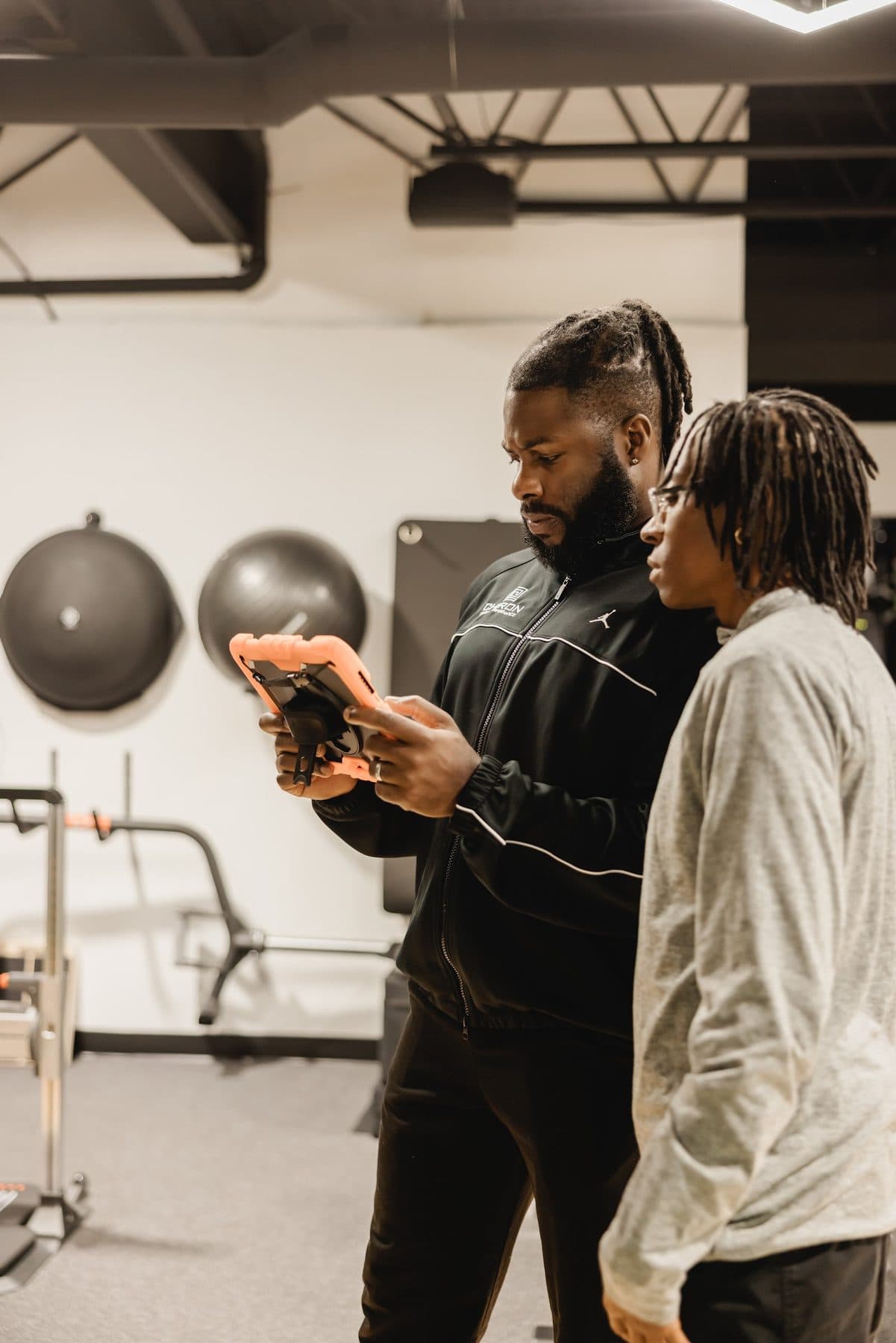
Through our initial assessment and testing process, we identified several areas that warranted attention, including hip-related issues, shoulder instability, and scapular control.
“All these different things we were finding were pieces of the puzzle,” Dr. Oh said.
Those findings gave us a clearer direction for his treatment and athletic development, and it’s led to a new regimen that has already produced significant relief.
This is the kind of insight that gives athletes a fighting chance at preventing injuries and putting an end to the recurring ones.
What Should Parents and Coaches Watch For?
Recurring injuries don’t always present themselves through an obvious setback. Sometimes the warning signs are more subtle.
Parents and coaches will want to pay closer attention when:
• The same area continues to flare up throughout a season.
• Swelling continues to return after activity.
• A joint feels unstable or occasionally “gives out”.
• An athlete develops a pattern of seemingly unrelated injuries over time.
• The same injury repeatedly requires treatment.
• An athlete improves with rest but experiences the same problem when activity increases.
“A lot of athletes will say, ‘I was out and about and my knee gave out,’” Dr. Oh said. “That’s not normal.”
When instability, recurring swelling, or repeated symptoms continue in spite of modifications or treatment, it’s time to look more closely at the underlying cause.
Preventing Recurring Injuries Starts Before the Next Injury
Successful prevention means more than reacting every time something hurts. Prevention begins with understanding how factors like training, recovery, nutrition and workload affect an athlete’s performance.
From a clinical standpoint, that means identifying risk factors early.
Screening an athlete before or during a season helps us establish a baseline and identify areas that deserve attention before a minor problem has a chance to become a major one. This can be especially valuable in sports like soccer and basketball where non-contact injuries are common.
“They need to make sure they have the proper systems in place to monitor the athletes throughout the season,” Dr. Oh said. “Monitoring their workload, their fatigue, their symptoms and making sure that if they do have acute injuries that are minor, they’re developing interventions and recovery modalities so they don’t become major injuries.”
Training volume, sleep, recovery, strength and movement mechanics all play a role. And when we evaluate an athlete at Chiron, we have the ability to look at multiple pieces together, like body-composition, which allows us to see how the athlete is responding to training and recovery on a cellular level.
The Goal is a More Resilient Athlete
Ultimately, our goal isn’t to just get an athlete out of pain. It’s to help athletes understand their bodies well enough to perform, recover, and adapt to the demands of their sport.
A resilient athlete understands that every season has ebbs and flows. They understand that recovery is part of the training.
They understand that strength work, conditioning, nutrition and rehabilitation are not distractions from their sport – they’re part of what allows them to keep playing it.
And most of all, they learn when something deserves attention instead of trying to tolerate it.
“The one thing that I wish athletes understood about reoccurring athlete injuries is there's always a root cause of that,” Dr. Oh said. “If it's something that's reoccurring, it could be something internally with you, metabolically, how you're working, or your recovery. So instead of continuing to hammer and worsen that injury, let's take a step back and understand why this issue is always occurring. Then we can make an actionable plan, because if you're an athlete who's serious and you're trying to get to the next level or continue to play, we need you to learn how to play in a safer, resilient way.”
Recurring Injuries Shouldn’t Be Examined in Silos
Athletes in organized sports often have access to excellent physicians, therapists, trainers and coaches. The challenge is that those professionals do not always have access to the same information or work together as one coordinated team.
One person may treat the injury. Another may handle the rehabilitation. Someone else may direct strength and conditioning. And a coach is managing practices, games and workloads.
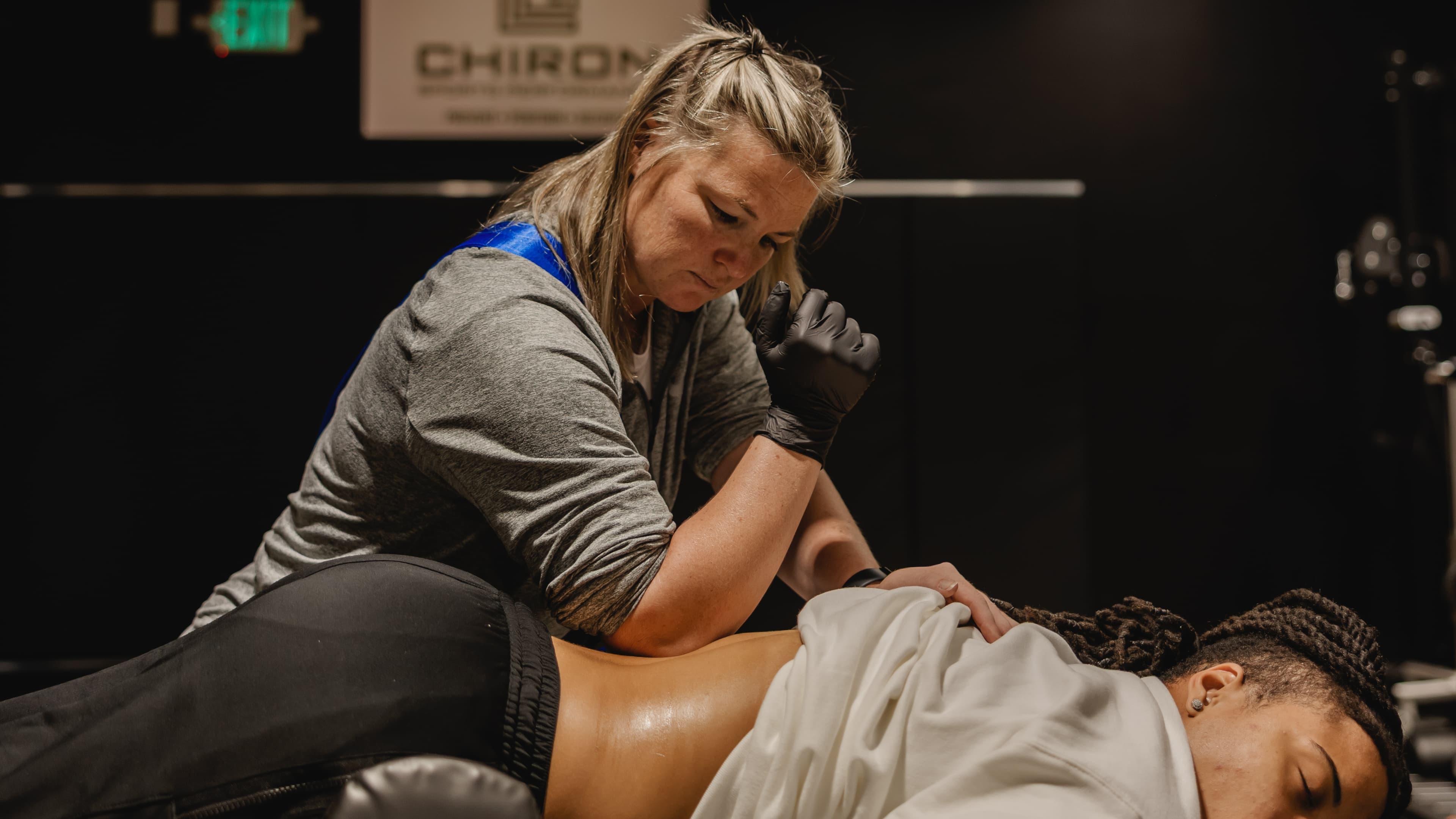
At Chiron, our model is designed to bring those pieces together. Under one roof we evaluate the whole athlete, examine the objective data, collaborate with coaches, medical providers and other important players involved in the athlete’s development, and support the athlete in their training and recovery at our facility.
The end game isn’t to replace the people already caring for the athlete. It’s to help everyone see more of the same picture and get the athlete to the very best outcome.
So Look Beyond Where It Hurts
At Chiron Sports Performance, we use objective testing and a whole-athlete approach to better understand the factors that may be influencing performance, recovery and resilience.
For parents and athletes, an Athlete Blueprint evaluation can provide a more complete look at how the body is functioning and where opportunities for improvement exist.
For coaches, athletic directors and trainers, we welcome the opportunity to show you how we evaluate and develop athletes, and how Chiron can complement the work you are already doing with them.