


Who is Chiron Sports Performance? The Founders’ Vision
The Vision Behind Chiron Sports Performance
Who is Chiron Sports Performance?
It happens almost immediately.
Someone walks through the doors of Chiron Sports Performance in Bloomfield Hills and stops.
“Whoa.”
That reaction is intentional.
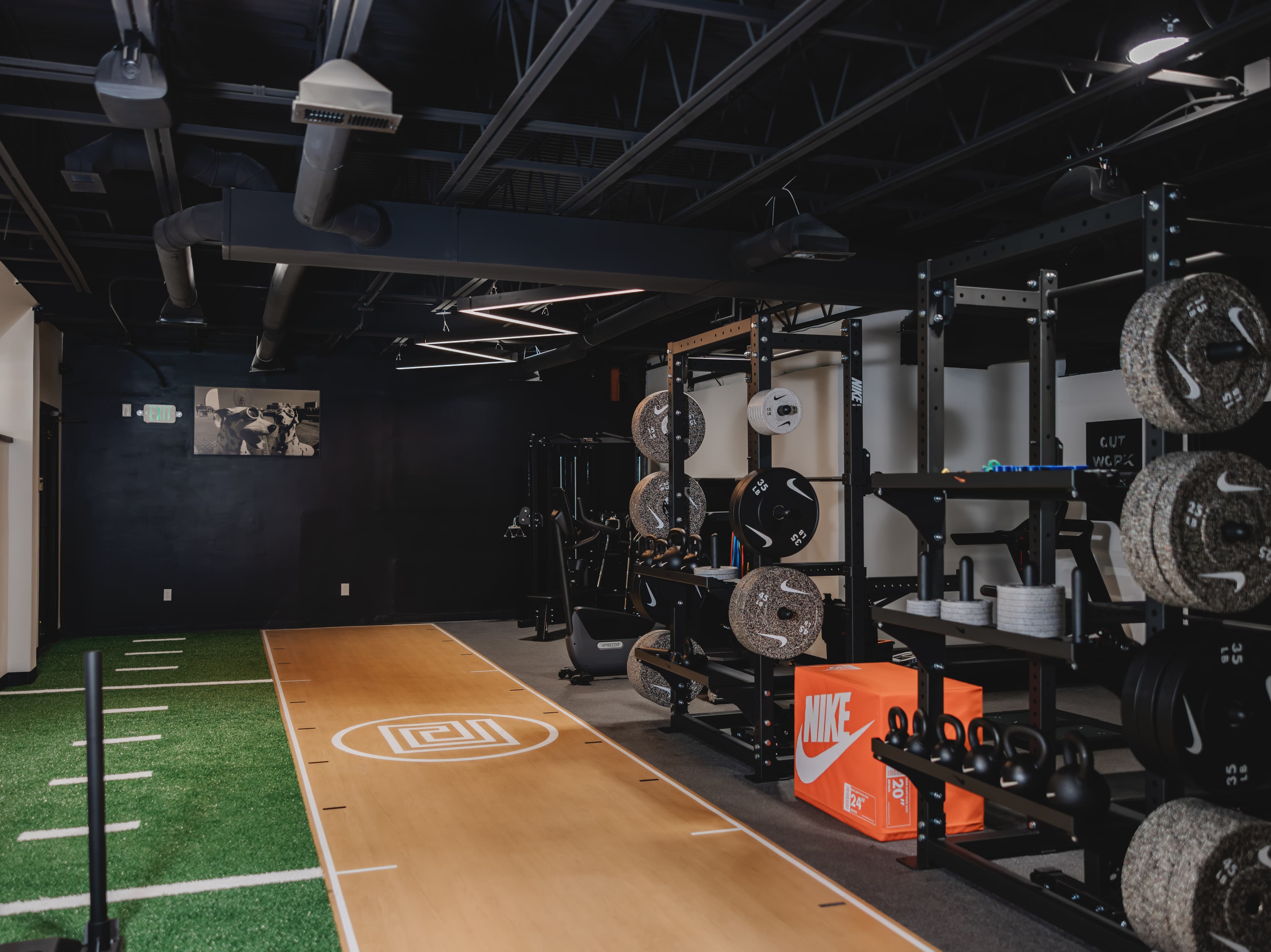
There’s a basketball court lane. A turf lane. Sleek Nike equipment. Training and recovery spaces. Medical professionals working just steps away.
The space feels polished and elevated, but not untouchable. Part private training facility, part sports medicine, part something that has yet to be defined.
And that’s the whole point.
The vision was big. Chiron Sports Performance would be more than a traditional sports medicine practice. It would be more than a gym. More than a physical therapy facility, or even a sports science lab.
It would be a physician-led, data-driven, sports medicine and performance center built around the whole athlete. One that would connect medical care, objective testing, training, recovery, and return-to-play for an athlete in one coordinated approach.
Any athlete who walks through the doors and is ready for their journey will be evaluated, tested, and measured to establish an exact picture of how their body is performing.
The results could demonstrate areas that may warrant attention and opportunities for improvement.
And all of this information would generate into a one-of-its-kind Athlete Blueprint – a tool the Chiron Sports Performance team would use alongside the athlete’s existing coaches, physicians, and other specialists – guiding decisions around training, recovery, and more.
Then, when the athlete is trained, they’re reassessed. As progress is measured, the Blueprint evolves.
In other words, Chiron was designed to bring together the pieces of athlete care that is otherwise siloed – and uses their findings to help athletes prevent, perform, and recover at their highest level – on and off the field.
The Founders’ Journey
So what exactly did Heather and her husband, Dr. Chibuzo “Casey” Ohanaja, build here?
To answer that, you have to go back to a time when Chiron didn’t exist – and when Casey was coming home from work looking, in Heather’s words, like “a shadow of himself.”
Casey had spent years becoming a sports medicine physician. Long before that, he had been an athlete himself, competing in track and field, basketball, and football up to the collegiate level.
He understood the demands athletes put on their bodies because he had lived them – training, injuries, recovery, academics, extracurricular demands and all the mental discipline required to balance it all.
“To truly understand the needs of an athlete, you have to be a person who’s gone through what they go through,” Casey says. “And even more for me, growing up and being a passionate athlete, I remember working to build myself up, dealing with injuries and balancing extraneous things like extracurriculars and academics – and just being a mentally sound individual. Those things resonate with me in terms of what an athlete needs, and constantly talking with prospective clients, that resonates with them. Whenever we talk about our model, they’re saying, ‘This really resonates with what I need.’”
All the years he put into becoming a sports medicine physician were driven by that vision.
That’s why it was so heartbreaking for his wife Heather to see what the actual experience of practicing “sports medicine” in the traditional setting was doing to him.
Casey had completed his sports medicine fellowship. He had earned his MD, completed residency training, earned a Master of Public Health (MPH), and obtained several additional certifications related to sports medicine. Casey pursued the specialty he deeply cared about. Yet the opportunities he encountered often required him to spend the overwhelming majority of his time practicing traditional primary care, with sports medicine only occupying a small portion.
There was nothing wrong with caring for those patients, of course. But Heather could see that the work was increasingly disconnected from the reason Casey pursued sports medicine in the first place.
And yet, Casey was prepared to keep going.
“He was being so stoic because he’s a husband and a father and that’s who he is,” Heather says. “He always told me, ‘If this is going to be too much for you and you can’t do it, I’ll go get a regular clinical job at a hospital. And I’ll do that for the rest of my career if you think it’s too much.”
Heather didn’t want that.
“I want this just as bad as you want it,” she said.
For Casey – driven by his experience as an athlete and sports medicine physician – the dream was about taking care of the whole athlete, across ages and competitive levels, while providing the same high standard of thoughtful, individualized care.
For Heather, it was about building something different, drawing on her instincts as an entrepreneur and her background in operations, customer experience, and brand-building.
Heather remembers pointing to buildings and telling her parents she would someday own one. She didn’t necessarily know what business would occupy that building, but she knew that, one day, she wanted to create something of her own.
And over time, their two ambitions began to converge. So the Ohanajas decided: If they couldn’t find the position that fulfilled their shared vision, they would create it themselves.
Finding the right space took time. They explored several possibilities, trying to envision not only what would fit inside a building, but what Chiron itself was supposed to become.
The space they landed on from the inside wasn’t impressive, but they had an idea of how to transform it. At first this was hard to see from an outsider’s perspective; reality presented them with old carpets, dank rooms, dated cabinets, and low ceilings.
But the Ohanajas willed themselves to look past the literal and see what was possible.
They tore out wallpaper with their own hands.
They asked for walls and ceilings to be removed in ways the landlord had never been asked to do before.
If this was the place where physicians, trainers, therapists, and other professionals could work together around the whole athlete, the space itself needed to reflect that.
It had to feel knowledgeable and premium, but also personal, welcoming, and authentic – a place where serious work could happen without making an athlete feel as though they had to arrive at an elite level to belong there.
And coaches and trainers who were already involved in an athlete’s development would be welcomed here, too. Chiron Sports Performance wasn’t built to replace the people an athlete had already put their trust in. It was being built to work alongside them, adding another layer of insight, visibility, communication, and support.
For the athlete, that meant being surrounded by people who were not only invested in how they perform, but in their health, progress, and long-term goals. Casey and Heather envisioned a place where athletes could give their all, knowing the team around them was just as committed to helping them succeed.
Different disciplines could finally work together in the same environment with the athlete at the center of it all.
That was especially important to Casey.
Throughout his career, he had watched sports medicine, strength and performance work, recovery, and coaching operate in separate silos. One professional might treat an athlete’s injury, another working on their strength, a coach working on the sport itself, and still another medical professional overseeing care.
Too often, the complete picture didn’t travel with the athlete as a whole.
Chiron was designed to help bridge those gaps.
Objective testing and sports science would give the team measurable information about how an athlete is moving and performing.
But the technology would only be useful if the people interpreting it were communicating.
Casey and Heather wanted Chiron to become the hub for that kind of coordinated athlete care. If one team member needed to step in for another, the athlete’s information and progress wouldn’t have to start all over. Documentation and communication would allow the next person to understand where the athlete had been, what the team had learned, and where they were headed.
The idea is to never to replace anyone, it’s to get them working together.
And that philosophy would ultimately shape the people Heather and Casey were willing to hire.
When they first posted Chiron’s openings, they weren’t sure what kind of response they would receive.
But more than 100 people applied, and many echoed a similar message.
“They told us they were really excited about what we were offering,” Casey recalls. “It’s everything people want to do in this realm – combined under one roof. And they kept telling us how innovative they found it to be; how they couldn’t recall any other place that is doing everything we’re doing.”
Chiron Sports Performance officially opened in 2026. And for Casey and Heather, the opportunity to realize their shared vision was finally at hand.
Part of that vision meant operating independently of insurance companies, giving Chiron’s medical team the freedom to make decisions based on what is medically appropriate, evidence-based, and right for the individual athlete.
And while the employees, athletes, and families are gaining tremendous benefits from it, the Ohanaja family is finding life has also changed for the better. Their one-year-old daughter, Harper, even has her own play space in the office and accompanies her parents to industry expos.
As for the Ohanajas now – they’re still building. But what they’ve already put in place is remarkable.
At Chiron, athletes will work hard. Really hard. But they’ll get more value out of that hard work than they’ve ever imagined. They’ll become masters of prevent, perform, and recover.
That’s the kind of support every athlete deserves, and it’s the reason Casey and Heather worked so hard to make Chiron Sports Performance a reality.
Sports medicine. Training. Recovery. Testing. Coaches. Physicians. Specialists.
None have to exist in isolation from the others.
It’s truly what becomes possible when the walls between them finally come down. And it all started with seeing which walls never needed to be there in the first place.
This is Chiron Sports Performance.
This is athlete care at its finest.
Learn more about Chiron Sports Performance in Bloomfield Hills and our approach to sports medicine, training, and recovery.